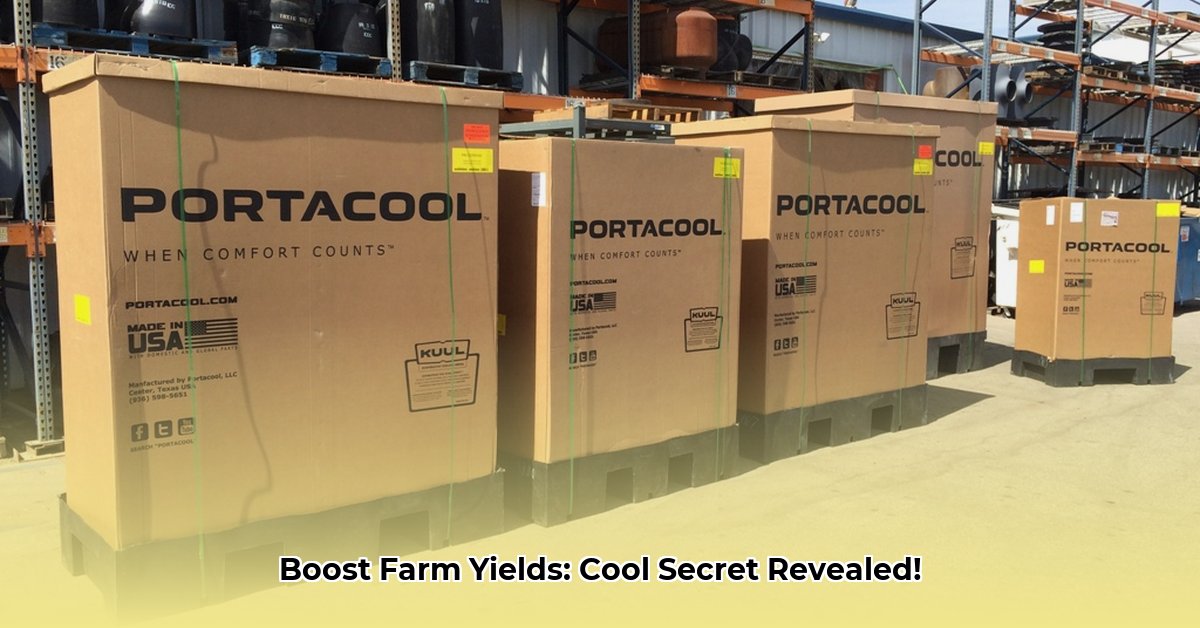
Portacool Evaporative Coolers: A Practical Guide for Sustainable Agriculture
Summer heat significantly impacts both worker productivity and crop yields. Traditional cooling methods can be expensive and environmentally unfriendly. Evaporative coolers, like those from Portacool Tractor Supply, offer a potentially sustainable alternative. This guide provides actionable steps to determine if a Portacool system is the right choice for your farm. For more information on similar cooling options, check out these other cooling options.
Understanding Evaporative Cooling
Evaporative cooling mimics the natural cooling effect of sweating. As water evaporates, it absorbs heat from the surrounding air, reducing the temperature. Portacool units utilize this principle to create a cooler environment. However, their effectiveness is significantly influenced by humidity; they function best in drier climates.
Is Evaporative Cooling Right for Your Farm?
Before investing, carefully consider these factors:
Climate: Evaporative coolers are most effective in dry climates. High humidity reduces their cooling capacity. Analyze historical weather data for your area, focusing on humidity levels during peak heat periods. Does your climate favor this technology?
Water Availability: These systems require a reliable water source. Assess your water availability and the potential environmental impact of increased water use. Explore water conservation strategies like rainwater harvesting to minimize your impact.
Energy Costs: Although typically more energy-efficient than air conditioning, evaporative coolers still consume electricity. Calculate the potential energy costs and explore options to offset expenses, such as solar power integration.
Farm Size and Specific Needs: Determine the areas requiring cooling (fields, packing sheds, etc.) and the number of units needed. Starting with a small-scale pilot program can minimize risk and provide valuable data before a larger investment.
A Step-by-Step Approach to Evaluating Portacool Coolers
Assess Your Needs: Identify specific areas needing cooling, the number of workers to be impacted, and typical peak temperatures. Detailed climate data will help determine the expected effectiveness of cooling.
Research Portacool Models: Thoroughly explore Portacool Tractor Supply's offerings, considering cooling capacity, features, and price. Compare different models based on your specific requirements and budget constraints.
Conduct a Pilot Study: Begin with a small-scale test to assess the system’s effectiveness in your environment. This reduces financial risk while gathering essential performance data for future decisions. This is particularly crucial given the variable nature of climate conditions.
Monitor and Record Data: Meticulously record temperature changes, water consumption, energy usage, worker productivity, and crop health during the pilot. Consistent, reliable data is critical for evaluating the coolers' impact.
Analyze Results: Evaluate the data collected to determine if the benefits (improved worker comfort, potential yield increases) outweigh the costs and challenges. This analysis will inform your decision-making process and guide future improvements.
Weighing the Pros and Cons
| Benefits | Drawbacks |
|---|---|
| Improved worker comfort and potential productivity | Reduced effectiveness in humid conditions; climate-dependent |
| Potential yield increase in hot, dry climates | Requires a reliable water source; mindful of water usage needed |
| Generally more energy-efficient than AC | Significant initial investment cost; ongoing maintenance required |
| Potentially lower carbon footprint | Performance varies with environmental conditions |
Sustainability Considerations
Sustainable farming practices are paramount. Consider:
Water Conservation: Utilize water-efficient models and explore water reuse options like rainwater harvesting. Regular maintenance is key for maximizing efficiency and minimizing waste.
Energy Efficiency: Prioritize energy-star rated models and explore renewable energy sources like solar power to reduce reliance on non-renewable resources.
Life Cycle Assessment: Consider the cooler's entire lifecycle – from manufacturing to disposal – and choose models with sustainable materials and end-of-life options.
Optimizing Water Usage for Sustainable Farming
Evaporative coolers, while effective, use considerable water. Efficient water management is crucial for sustainability.
Regular Maintenance: Keep the cooler clean to ensure optimal efficiency and reduce water waste.
Water Recycling: Explore options for water reuse (after proper treatment).
Smart Technologies: Utilize smart controls and sensors to optimize water usage based on real-time conditions.
Pad Selection: Select high-efficiency cooling pads designed for optimal water retention.
Efficient Ventilation: Optimize airflow within your structures to improve cooling and reduce water needs.
Data-Driven Refinement: Continuously collect and analyze data to identify areas for improvement in water management.
In Conclusion: Portacool evaporative coolers hold potential benefits for improving farm operations. However, a thorough assessment of your specific circumstances is essential. A phased approach, starting with a pilot study, is advised. Ongoing research will further illuminate the long-term impacts on productivity and environmental sustainability. Remember, responsible water and energy management are key to sustainable agricultural practices.